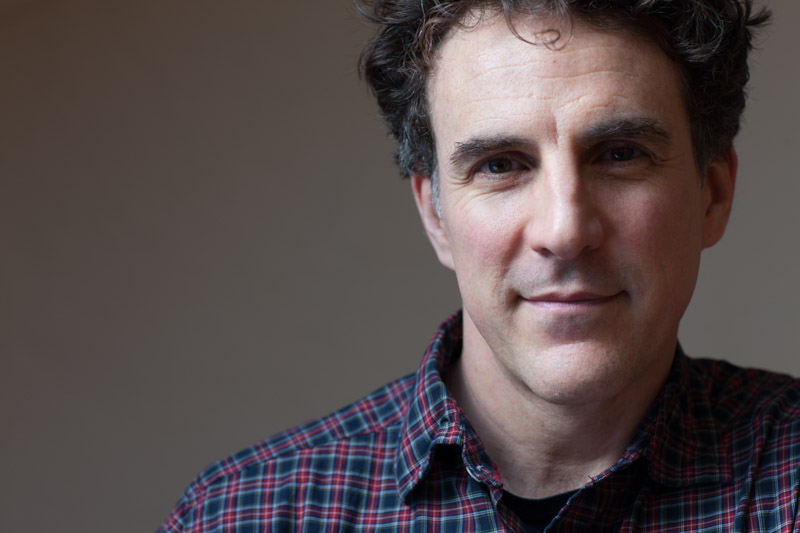
Most professionals build depth in one discipline. Mine has built depth in three — and each one is load-bearing for the next. The thread connecting them: I have always worked where process discipline is inseparable from outcome quality.
I'm a solo consultant based in St. Joseph, Minnesota. I work directly with law firms to automate document workflows, client intake, and the repetitive administrative work that quietly consumes attorney and staff time.
I use Anthropic's Claude to build practical automations that fit into your existing workflow — no rip-and-replace, no new software your team won't use. You'll see results quickly, and you'll understand exactly what's running.
What I bring to that work is a background in environments where process discipline wasn't optional — military intelligence, medical device manufacturing, large-scale energy infrastructure. The instincts those environments build transfer directly to the work of making a law firm run more precisely.
Military Intelligence · Precision Medical Device Manufacturing
I began my professional life holding two distinct roles simultaneously inside the United States Navy. Both shaped the way I think about process, accountability, and precision in ways no classroom could have.
After the Navy, I arrived at Jabil Healthcare in Asheville, North Carolina — a facility producing precision pharmaceutical delivery devices including insulin pens and asthma inhalers. The stakes were different, but the standard I held myself to was the same: errors affect people.
As Quality Engineer and then Quality Project Manager, I built and owned:
Errors affect people. That standard follows you — into every industry, every role, every workflow you touch.
Standards Adoption · Enterprise Process Improvement
If Life 1 taught me what good standards look like, Life 2 taught me how to build standards that organizations actually adopt. That is a harder problem — and it requires a different skill set.
Specific project work at Blattner included:
The gap between a well-written procedure and a well-followed one is not a documentation problem. It's a trust and communication problem. Knowing that changes how you build.
Where three careers converge
Put these experiences together and a particular kind of professional emerges — not a credential set, but a way of operating. Someone who has worked in environments where process discipline was not optional has a different relationship to standards than someone who learned them in a classroom.
They don't need to be convinced that documentation matters. They already know what happens when it doesn't.
For law firms, that translates into three specific capabilities:
There is a difference between understanding a process and having lived inside one. Having created procedures under deadline, watched adoption fail for reasons that had nothing to do with the template, and built cross-functional relationships from scratch rather than from authority — that experience tends to change how you approach the work.
It makes you slower to assume the standard is wrong and quicker to ask why it isn't being followed.
Book a free consultation and we'll identify one thing slowing your team down — and show you what fixing it looks like.
Book a Free Consultation